sallymn: (words 6)
[personal profile] sallymn

eidolon [ahy-doh-luhn]

noun:
1 a phantom; apparition
2 an ideal

Examples:

The gods send an eidolon (an image of Helen, made of air) to Troy instead. The war is fought over the eidolon and the city is destroyed. The Greeks finally reclaim eidolon-Helen, whereupon she disappears into the air from which she was made. (Natalie Haynes, Helen of Troy: the Greek epics are not just about war - they're about women, The Guardian, November 2019)

There the eidolon sits, flickering like a neon light deep in the library stacks, swinging her legs atop the sliding shelves where the crumbly books by dead men wait in dusty darkness for the touch of human hands. (Lauren Groff, Judith Shakespeare, Grinning Literary Ghost: Lauren Groff on the Nuances of A Room of One’s Own, Literary Hub, January 2025)

A dark wisp of smoke - Percy guessed it must be an eidolon - seeped into a Cyclops, made the monster hit himself in the face, then drifted off to possess another victim. (Rick Riordan, The House of Hades)

You have never seen Mr Wakem before, and are possibly wondering whether he was really as eminent a rascal, and as crafty, bitter an enemy of honest humanity in general, and of Mr Tulliver in particular, as he is represented to be in that eidolon or portrait of him which we have seen to exist in the miller's mind. (George Eliot, The Mill on the Floss)

Origin:
1801, 'a shade, a specter,' from Greek eidolon 'appearance, reflection in water or a mirror,' later 'mental image, apparition, phantom,' also 'material image, statue, image of a god, idol,' from eidos 'form, shape'. By 1881 in English as 'a likeness, an image.' (Online Etymology Dictionary)

simplyn2deep: (Hawaii Five 0::team::red cup)
[personal profile] simplyn2deep
February 17, 2026

Ebullient (adjective)
ebullient [ih-buhl-yuhnt, ih-bool-]


adjective
1. overflowing with fervor, enthusiasm, or excitement; high-spirited: The award winner was in an ebullient mood at the dinner in her honor.
2. bubbling up like a boiling liquid: ebullient lava streaming down the mountainside.

Other Word Forms
ebullience noun
ebulliently adverb
nonebullient adjective
nonebulliently adverb
unebullient adjective

Related Words
agitated, brash, buoyant, chipper, effervescent, effusive, elated, exuberant, irrepressible

See more synonyms on Thesaurus.com

Origin: First recorded in 1590–1600; from Latin ēbullient- (stem of ēbulliēns “boiling up,” present participle of ēbullīre ), equivalent to ē- + bulli- (derivative of bulla “a bubble”) + -ent-; e- , boil ( def. ), -ent

Example Sentences
During a streamed interview in November with Zeta CEO David Steinberg, Ives sounded ebullient about Zeta’s prospects and said the company was “almost like a step ahead” of an offering from Salesforce.
From Barron's

After a night of jubilation in Dakar, the morning newspapers were ebullient: "Heroic!"
From Barron's

Aside from a mournful clarinet line in the first part of its third and final movement, the work had a surprisingly ebullient spirt for something composed by a Dane in 1944.
From The Wall Street Journal

Examining your current holdings, you might find that ebullient stock markets last year expanded your share of equities to 70%.
From The Wall Street Journal

Some investors were hoping for a more ebullient end to 2025, pinning their hopes on a holiday-season market phenomenon that lifts share prices in the days surrounding Christmas and New Year’s Day.
From The Wall Street Journal
stonepicnicking_okapi: letters (letters)
[personal profile] stonepicnicking_okapi
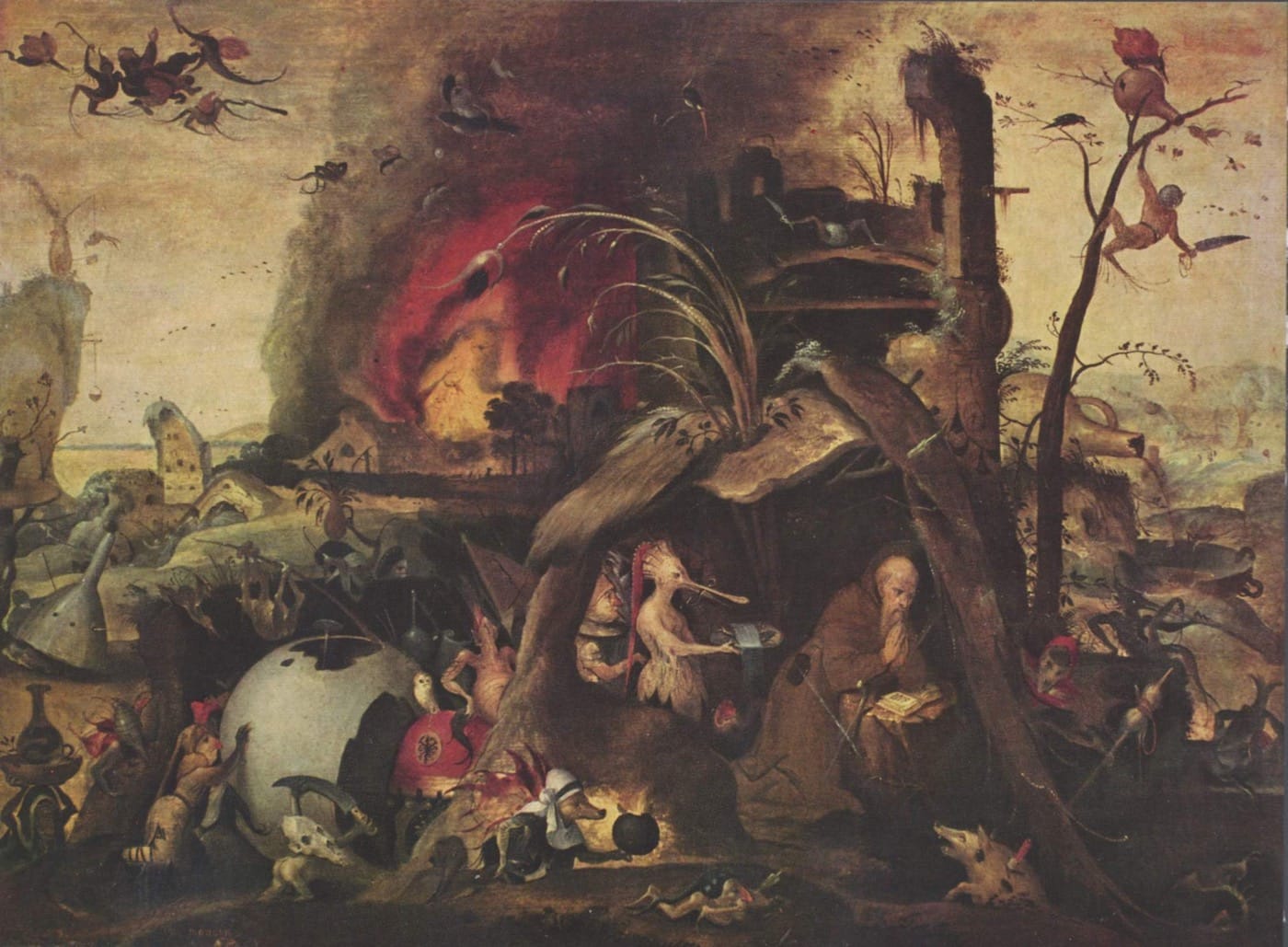
ergotism [ur-guh-tiz-uhm]

noun

a condition caused by eating rye or some other grain that is infected with ergot fungus or by taking an overdose of a medicine containing ergot, characterized by cramps, spasms, and a form of gangrene. Also called: Saint Anthony's fire.

examples

1. Looking at depictions of St. Anthony in the paintings of Renaissance masters, the influence of the disease of ergotism on the history of art starts to become clear. "How Renaissance Painting Smoldered with a Little Known Hallucinogen." Forrest Muelrath. 15 Sept 2017

2. Experts now know that those symptoms are common among people with convulsive ergotism, or ergot poisoning, which is caused by a fungus that can grow on wheat, rye, and other similar grains. Sarah Klein, Health.com, 2 Oct 2017

origins
borrowed from French ergotisme, from ergot ergot + -isme -ism

ergot comes from "spur on a rooster, a similar growth on another bird or mammal, fungal sclerotium resembling a rooster's spur," earlier also argot, going back to Old French argoz (subject case) "spur of a bird or animal," derivative from a Gallo-Romance base *arg- "spine, spiny or thorny plant," probably from a pre-Latin substratal language

Jan Mandijn, “The Temptation of Saint Anthony” (circa 1550)
The Temptation of St. Anthony
calzephyr: MLP Words (MLP Words)
[personal profile] calzephyr
Eucatastrophe - noun.

Coined by J.R.R. Tolkien in his essay "On Fairy-Stories" (1947), which is in-turn based on a lecture from 1939, is a word to describe a miraculous turn of events in a narrative. You could even say it's a word that avoids catastrophe ;-D The "eu" prefix is from the Greek word for "good".

Eucatastrophes are often swift and unexpected, such as the Prince waking Snow White or the One Ring falls into Mount Doom.


simplyn2deep: (Hawaii Five 0::Chin Ho::hey ladies)
[personal profile] simplyn2deep
Tuesday, Oct. 21, 2025

Evenfall (noun)
evenfall [ee-vuhn-fawl]


noun
1. the beginning of evening; even; evening; twilight; dusk.

Origin: First recorded in 1805–15; even + fall

Example Sentences
Each evenfall as the khalasar set out, she would choose a dragon to ride upon her shoulder.
Read more on Literature

"We can be at the mountain by evenfall," Uncle Brynden said, "but the climb will take another day."
Read more on Literature

The song of moonlight all That trembles as aspens shake, The thrush sang it at the evenfall To the listening swan on the blue lake.
Read more on Project Gutenberg

Only the curlew's mournful call, Circling the sky at evenfall, And loon lamenting over all.
Read more on Project Gutenberg

The cactus and the aloe bloom Beneath the window of your room; Your window where, at evenfall, Beneath the twilight's first pale star, You linger, tall and spiritual, And hearken my guitar.
Read more on Project Gutenberg
sallymn: (words 6)
[personal profile] sallymn

exculpate [ek-skuhl-peyt, ik-skuhl-peyt]

verb:
to clear from a charge of guilt or fault; free from blame; vindicate

Examples:

He devises a daring, sometimes distracting but ultimately inspired format by saving his commentary for footnotes that contextualize, teasingly contradict and occasionally exculpate Rodgers from her unsparing self-assessments. (Charles McNulty, Stephen Sondheim and Mary Rodgers, late Broadway greats, have brilliant last words, Los Angeles Times, November 2022)

An amnesty could exculpate as many as 1,400 activists and politicians involved in the attempt to separate Catalonia from Spain. (Spanish Socialists and Catalan Junts reach deal for government support, amnesty, Reuters, November 2023)

In a perverse circular logic, the crime itself can come to seem like the clearest evidence of the condition that is held up to exculpate the mother - and also like its own form of punishment. (Eren Orbey, A Husband in the Aftermath of His Wife's Unfathomable Act, Reuters, October 2024)

Cato attacked him for this, and Lucilius ran the risk of losing his tribunate, and many of the friends of Pompeius came forward to exculpate him and said that he did not seek that office or wish for it. (Plutarch, Lives)

Origin:

'to clear from suspicion of wrong or guilt,' 1650s, from Medieval Latin exculpatus, past participle of exculpare, from Latin ex culpa, from ex 'out of' + culpa ablative of culpa 'blame, fault.' (Online Etymology Dictionary)

There's no need to say 'my bad' if you're unfamiliar with exculpate; while the word is far from rare, it is most often encountered in formal writing in reference to the clearing of someone of alleged fault or guilt, as in 'they were exculpated of any wrongdoing.' You may be more familiar with a pair of terms that, like exculpate, come from the Latin noun culpa, meaning 'blame' or 'guilt.' One is the adjective culpable, used to describe someone deserving of condemnation or blame. The other is the Latin phrase mea culpa, which translates directly as 'through my fault' and refers to an acknowledgement of personal fault or error that is more formal than, well, 'my bad.' (Merriam-Webster)

med_cat: (woman reading)
[personal profile] med_cat
exigent, adj.

ex·​i·​gent ˈek-sə-jənt
ˈeg-zə-

1: requiring immediate aid or action

exigent circumstances

2: requiring or calling for much : demanding

an exigent client


Did you know?

Exigent is a formal word with meanings closely tied to its Latin forbear, exigere, meaning "to demand." Exigent things and people demand attention—for example, an exigent client expects so much that they are hard to satisfy, and exigent circumstances are so significant that they can be used to justify certain police actions without the warrant typically required. Before exigent joined the language in the early 1600s, the noun exigency was being used to refer to something that is necessary in a particular situation—for example, the exigencies of an emergency situation might require that certain usual precautions be ignored. That word dates to the late 1500s, but even earlier, in the mid-1400s, exigence was on the scene doing the same job. All three words—exigent, exigency, and exigence—continue to meet the demands of English users, albeit not frequently in everyday conversation.

(Source: m-w.com) Today's word is brought to you by [personal profile] amaebi 
sallymn: (words 6)
[personal profile] sallymn

equipoise [ee-kwuh-poiz, ek-wuh-]

noun:
1 a state of equilibrium
2 counterbalance

Examples:

One reason for the endurance of George Stevens’s film, from 1953, is the supreme equipoise that it finds between two contending impulses - the will to wander, moving restlessly through a desert land, versus the urge to take root, battling for your right to settle down and defying those who would snatch it away. (Anthony Lane, Tough Girls, The New Yorker, January 2016)

LinkedIn has turned into the place you go to for the best of all possible worlds, where corporate vision, whole hearts, great work and a fulfilled life coexist in perfect equipoise, with good times and teamwork leading to virtuous riches and success for all. (Lucinda Holdforth, ‘A lot of nonsense’: It’s time to call out LinkedIn, The Sydney Morning Herald, July 2023)

Faye rarely looks inward; those books exude a kind of chilly spiritual equipoise. (Helen Shaw, Rachel Cusk and the Claustrophobia of Second Place, Vulture, April 2021)

Gradually, however, the conviction came upon me that I could, by a certain concentration of thought, think the veil away, and so get a glimpse of the mysterious face - as to which the two questions, "is she pretty?" and "is she plain?", still hung suspended, in my mind, in beautiful equipoise. (Lewis Carroll, Sylvie and Bruno)

Origin:

From Latin aequi- (equal) + Old French pois (weight), from Latin pendere (to weigh). Ultimately from the Indo-European root (s)pen- (to draw, to spin) (Wordsmith)

simplyn2deep: (NWABT::Scott::hoodie)
[personal profile] simplyn2deep
Tuesday, Sep. 24, 2024

En Masse (noun)
en masse [ahn mas, en; French ahn mas]


adverb
1. in a mass; all together; as a group: The people rushed to the gate en masse.

Idioms and Phrases
In one group or body; all together. For example, The activists marched en masse to the capitol . This French term, with exactly the same meaning, was adopted into English about 1800.

Related Words
altogether

See synonyms for En Masse on Thesaurus.com

Origin: Borrowed into English from French around 1795–1805

Example Sentences
They pulled up in unmarked cars and on motorcycles, appearing en masse out of the darkness.
From The Daily Beast

The Internet cool kids are, of course, rallying against Swift en masse.
From The Daily Beast

But if word of the mission reached the city, there was a risk that the hostages would be executed en masse.
From The Daily Beast

For women who are attacked en masse, this new reporting system will save substantial time and energy.
From The Daily Beast

Editors were apoplectic, and they showed it by quitting en masse, leaving Mays to pick up the pieces.
From The Daily Beast
simplyn2deep: (Teen Wolf::Sterek::BW)
[personal profile] simplyn2deep
Tuesday, Sep. 17, 2024

Edacity (noun)
e·dac·i·ty [ih-das-i-tee]


noun
1.the state of being edacious; voraciousness; appetite.

Related Words
hunger, voracity

See synonyms for Edacity on Thesaurus.com

Origin: 1620–30; < Latin edacitas, equivalent to edaci- (stem of edax ) gluttonous, equivalent to ed- eat + -aci- adj. suffix + -tas -ty

Example Sentences
Edacity, rapacity;—quite contrary to the finer sensibilities of the heart!
From Project Gutenberg
sallymn: (words 6)
[personal profile] sallymn

esprit de l'escalier [es-pree duh le-skahl-yey]

noun:
a perfect comeback or witty remark that one frustratingly comes up with only when the moment for doing so has passed

Examples:

Your esprit de l'escalier doesn't kick in until you're well out the door. (Lauren Collins, Sally Rooney Gets in Your Head, The New Yorker, December 2018)

Here's an unhappy truth about using language. Every minute of your life feels like l'esprit de l'escalier: replaying in your mind the too-late retort. (Nan Z Da, Language After the Fact: Rey Chow's 'Not Like a Native Speaker', Los Angeles Review of Books, June 2016)

Ox-eyed as Odysseus but sulky as Achilles, he crabbily voiced his complaints with the flame-grilling phrases that come to most of us in l'esprit de l'escalier (and sometimes did to him). (Robert Potts, My country or a deadline, The Guardian, September 1998)

She eventually went to sleep, but about a half-hour later I thought of the perfect thing to say. The French have a word for this. "L'esprit de l'escalier," the spirit of the stairway, where you think of the right thing to say just a little too late. (Brian Watanabe, A review of 'Inside Out' by a 4-year-old, The Guardian, July 2015)

I too responded to this banquet of niceness, when not adhering to my professional skepticism. But as I left the movie theater, I had my own little l'esprit de l'escalier. The film left me feeling simultaneously amused and used. (Richard Corliss, About Time: Richard Curtis' Love, Repeatedly, TIME, October 2013)


(click to enlarge)


Origin:

The still very foreign phrase esprit de l'escalier first appears in English in one of the remarkable, not to say idiosyncratic, let alone cranky books by the Fowler brothers, F W (Francis George) and H W (Henry George), The King's English (1906): "No one will know what spirit of the staircase is who is not already familiar with esprit d'escalier." The French phrase was coined by the French philosopher and encyclopedist Denis Diderot in his Paradoxe sur le comédien (1773–77), a dramatic essay or dialogue between two actors: "l'homme sensible, comme moi, tout entier à ce qu'on lui objecte, perd la tête et ne se retrouve qu'au bas de l'escalier" (a sensitive man like me, entirely overcome by the objection made against him, loses his head and can only recover his wits at the bottom of the staircase), that is, after he has left the gathering. (Dictionary.com)

Though well known in French, it seems to have begun to appear in English writing only at the beginning of the twentieth century. Apart from a reference to it by the brothers Fowler in 1906, the first recorded use in English is in Zuleika Dobson by Max Beerbohm (1911), but in a wittily inverted sense that shows the author expected his readers to understand and appreciate the reference: "What ought he to have said? He prayed, as he followed the victorious young woman downstairs, that l'esprit de l'escalier might befall him. Alas, it did not." (World Wide Words)

med_cat: (SH education never ends)
[personal profile] med_cat
Some uncommon words with their meanings:

1. Cagamosis (noun): an unhappy marriage

2. Agerasia (noun): the state of looking younger than one actually is

3. Hadeharia (noun): the practice of frequently using the word "hell" in speech

4. Estrapade (noun) : the attempt of the horse to remove its rider. (estrange: alienate or remove)

5. Auto-tonsorialist (noun): a person who cuts his own hair. (tonsorial= of or related to haircut or barbering)

6. Dactylonomy (noun): act of counting using one's fingers (dactyl: tip of the finger)

7. Jument (noun): An animal used to carry loads like horse or donkey (beast of burden)

8. Gargalesthesia (noun): the sensation caused by tickling

9. Bombilate (verb): make humming or buzzing sound loudly. "a student was bombilating in the class while the teacher was delivering lecture"

10. Maledicent (noun): a person who does frequent abusive speech

(Today's words are brought to you by FB memories; this list is from a group titled "Improve English Vocabulary", which has, sadly, gone inactive several years ago. This post was from 2012.)

simplyn2deep: (Scott Caan::cigar::yes)
[personal profile] simplyn2deep
Tuesday, Jul. 16, 2024

Enervate (verb, adjective)
en·er·vate [v. en-er-veyt; adj. ih-nur-vit]


verb (used with object)
1. to deprive of force or strength; destroy the vigor of; weaken.

adjective
2. enervated.

Other Words From
en er·va tion noun
en er·va tive adjective
en er·va tor noun
non·en er·vat ing adjective

See synonyms for Enervate on Thesaurus.com
Synonyms
1. enfeeble, debilitate, sap, exhaust.

Can be confused: energize, innervate, invigorate.

Origin: First recorded in 1595–1605; from Latin enervatus “weakened” (past participle of enervare “to weaken”), equivalent to e- “from, out of” + nerv(us) “sinew” + -atus adjective suffix; e- , nerve, -ate ; compare Anglo-French enervir, French énerver

Example Sentences
This was the beginning of the fatal practice destined in the end to enervate France and demoralize the army.
From Project Gutenberg

Then as they are almost all fighting men (tata toa) they are restricted that they may not weaken or enervate themselves.
From Project Gutenberg

What is the use of wondrous gifts of language, if they are employed to enervate, p. 19and not to ennoble, their hearers?
From Project Gutenberg

To enervate, irritate, or corrupt the body is to produce a like effect upon the mind.
From Project Gutenberg

They are full of weaknesses and pains that wear out life and enervate all their mental and spiritual powers.
From Project Gutenberg
simplyn2deep: (Teen Wolf::Sterek::BW)
[personal profile] simplyn2deep
Tuesday, Apr. 16, 2024

Evanescent (adjective)
ev·a·nes·cent [ev-uh-nes-uhnt]


adjective
1. vanishing; fading away; fleeting.
2. tending to become imperceptible; scarcely perceptible.

OTHER WORDS FROM EVANESCENT
ev·a·nes·cence, noun
ev·a·nes·cent·ly, adverb
non·ev·a·nes·cent, adjective
non·ev·a·nes·cent·ly, adverb
un·ev·a·nes·cent, adjective
un·ev·a·nes·cent·ly, adverb

WORDS RELATED TO EVANESCENT
brief, disappearing, fading, fleeting, momentary, passing, short-lived, temporary, tenuous, vanishing

See synonyms for evanescent on Thesaurus.com

ORIGIN: First recorded in 1700–1805; from Latin evanescent- (stem of evanescens ) “vanishing, disappearing”; see evanesce, -ent

HOW TO USE EVANESCENT IN A SENTENCE
And always in the background, evanescent but, in the end, accountable, is Rupert Murdoch—courted, feared and sometimes loathed.
MURDOCH ON THE ROCKS: HOW A LONE REPORTER REVEALED THE MOGUL'S TABLOID TERROR MACHINE | CLIVE IRVING | AUGUST 25, 2014 | THE DAILY BEAST

But that support was evanescent; it's already back below 50%, and probably still falling.
MEMO: THE AARON SORKIN MODEL OF POLITICAL DISCOURSE DOESN'T ACTUALLY WORK | MEGAN MCARDLE | APRIL 23, 2013 | THE DAILY BEAST

They are imagined as disembodied spirits, and are often visualized as vague or evanescent forms; hence, the white sheet routine.
WHAT'S THE DIFFERENCE BETWEEN GHOULS, GOBLINS, AND GHOSTS? | DICTIONARY.COM | NOVEMBER 1, 2010 | THE DAILY BEAST

When he does, for short walks on moonless nights or for the occasional meal, these evanescent periods of freedom are thrilling.
LOST MASTERPIECES | JACOB SILVERMAN | AUGUST 18, 2010 | THE DAILY BEAST

But success in a mission of this size may only bring limited and evanescent political benefits.
OBAMA'S PIRATE COUP | JULIAN ZELIZER | APRIL 13, 2009 | THE DAILY BEAST
sallymn: (words 6)
[personal profile] sallymn

eventide [ee-vuhn-tahyd]

noun:
(archaic or poetic) another word for evening

Examples:

East Bluff Trail at Devil's Lake State Park, perched along the Ice Age National Scenic Trail, will blow your eventide expectations. (Perri Ormont Blumberg, The 16 Best Sunset Hikes in America, Travel and Leisure, March 2022)

One of the most exciting and certainly one of the most wonderful sights of the countryside is the homecoming of the rooks at eventide. (George Muller, Country diary 1922: homecoming of the rooks at eventide is a wonderful sight, The Guardian, October 2022)

Sometimes he drives his flock home at eventide; sometimes he bivouacs sub jove frigido, under the cold heaven of night. (Arthur Mangin, The Desert World)

Then does everything become more mysterious, the sky frowns with clouds, yellow leaves strew the paths at the edge of the naked forest, and the forest itself turns black and blue - more especially at eventide when damp fog is spreading and the trees glimmer in the depths like giants, like formless, weird phantoms. (Fyodor Dostoyevsky, Poor Folk)

Gods, my gods! How sad the earth is at eventide! How mysterious are the mists over the swamps. (Mikhail Bulgakov, The Master and Margarita )

Origin:

'evening' (archaic), Old English æfentid; from even, 'end of the day,' Old English æfen, Mercian efen, Northumbrian efern) + tide, Old English tīd 'point or portion of time, due time, period, season; feast-day, canonical hour,' from Proto-Germanic tīdi- 'division of time' (source also of Old Saxon tid, Dutch tijd, Old High German zit, German Zeit 'time'), from PIE di-ti- 'division, division of time,' suffixed form of root da- 'to divide.' (Online Etymology Dictionary)

simplyn2deep: (NWABT::Scott::brood)
[personal profile] simplyn2deep
Tuesday, Mar. 5, 2024

Encumbrance (noun)
en·cum·brance [en-kuhm-bruhns]


noun
1. something that encumbers; something burdensome, useless, or superfluous; burden; hindrance: Poverty was a lifelong encumbrance.
2. a dependent person, especially a child.
3. Law. a burden or claim on property, as a mortgage.

Also in·cum·brance [in-kuhm-bruhns].

WORDS RELATED TO ENCUMBRANCE
burden, albatross, cross, debt, duty, hindrance, impediment, load, millstone, obstruction, responsibility, saddle, weight, worry, ball and chain, guilt, monkey on one's back, thorn in one's side

See synonyms for: encumbrance / encumbrances on Thesaurus.com

ORIGIN: First recorded in 1275–1325; Middle English encombraunce, from Middle French encumbrance; see origin at encumber, -ance

HOW TO USE ENCUMBRANCE IN A SENTENCE
So I would say it’s potentially a significant encumbrance to doing business.
'LIKE SHOOTING A MOVING TARGET.' THIS COMPANY IS TRYING TO WITHDRAW FROM RUSSIA. IT'S GETTING COMPLICATED | BELINDA LUSCOMBE | JUNE 1, 2022 | TIME

Often, those restrictions will more heavily constrain Democratic voters for whom added bureaucracy is a more challenging encumbrance.
ELEVATING DOUBT IS THE POINT | PHILIP BUMP | MAY 27, 2021 | WASHINGTON POST

For developers this is both incredibly freeing — a chance to make it big without all the encumbrance of a traditional studio — but also supremely precarious.
ON DISCORD, BOTS FIND A FOOTHOLD AS MINI INDIE SUCCESS STORIES | LUKE WINKIE | MARCH 25, 2021 | WASHINGTON POST

He points to the hassles of regulatory compliance and warding off hacks as an unnecessary encumbrance on businesses.
VERY GOOD SECURITY RAISES $60 MILLION TO MAKE DATA FORCE FIELDS FOR DOORDASH, BREX | RHHACKETTFORTUNE | DECEMBER 21, 2020 | FORTUNE

In LA, Don is an outsider; a Madison Avenue interloper; an encumbrance.
WHAT'S HAPPENED TO DON DRAPER? WHY EVERYONE’S FAVORITE ‘MAD MEN’ STUD NEEDS HIS MOJO BACK | LIZZIE CROCKER | APRIL 16, 2014 | THE DAILY BEAST
calzephyr: Scott Pilgrim generator (Default)
[personal profile] calzephyr
Etaoin shrdlu

Something of a cousin to lorem ipsum, etaoin_shrdlu is a nonsense phrase appearing in old newspapers and printed material. Generated by the two left-most columns of keys on a linotype machine keyboard.

Here's a 9 minute video explaining etaoin_shrdlu and the printing process in detail and a Wikipedia page that can summarize it better than I!


sallymn: (words 6)
[personal profile] sallymn

excoriate [ik-skawr-ee-eyt, -skohr-]

verb:
1 to denounce or berate severely; flay verbally
2 to strip off or remove the skin from

Examples:

I've had many worse evenings at musicals. But I fail to see the point of a show that doesn't know whether it wants to excoriate The X Factor or boost its TV ratings. (Michael Billington, I Can't Sing! review - 'Uneasily pitched between send-up and celebration', The Guardian, March 2014)

There is strife ahead, to be sure, but this is not a dour, sentimental exercise in which the misunderstood subject comes to a sad end while the survivors rend their governments and excoriate themselves for never having listened, really listened, and then drive out to the country to dedicate a tree. (Robert Lloyd, Review: In 'Butterfly,' gender identity is at the heart of Hulu's new family drama, Los Angeles Times, January 2019)

The drops of rain bruise us, false notes excoriate us, darknesses blind us! (Gustave Flaubert, The Temptation of St Anthony)

...insects still hum in the sunny air, and the sun is now a genial orb whose warm rays cheer but not excoriate. (Frank Richard Stockton, The Late Mrs Null)

Every blow that shakes it will serve to harden it against a future stroke; as constant labour thickens the skin of the hand, and strengthens its muscles instead of wasting them away: so that a day of arduous toil, that might excoriate a lady's palm, would make no sensible impression on that of a hardy ploughman. ( Anne Bronte, Agnes Grey)

Origin:

'to flay, strip off the skin of, to break and remove the outer layers of the skin in any manner,' early 15c, from Late Latin excoriatus, past participle of excoriare 'flay, strip off the hide,' from Latin ex 'out, out of, off' + corium 'hide, skin'. Figurative sense of 'denounce, censure' is recorded in English by 1708. (Online Etymology Dictionary)

Excoriate, which first appeared in English in the 15th century, comes from excoriatus, the past participle of the Late Latin verb excoriare, meaning 'to strip off the hide.' Excoriare was itself formed from a pairing of the Latin prefix ex-, meaning 'out,' and corium, meaning 'skin' or 'hide' or 'leather.' Corium has several other descendants in English. One is 'cuirass,' a name for a piece of armor that covers the body from neck to waist (or something, such as bony plates covering an animal, that resembles such armor). Another is 'corium' itself, which is sometimes used as a synonym of 'dermis' (the inner layer of human skin) (Merriam-Webster)

simplyn2deep: (Hawaii Five 0::Steve::uniform)
[personal profile] simplyn2deep
Tuesday, Nov. 21, 2023

Edify (verb)
ed·i·fy [ed-uh-fahy]


verb (used with object)
1. to instruct or benefit, especially morally or spiritually; uplift: religious paintings that edify the viewer.

OTHER WORDS FROM EDIFY
ed·i·fi·er, noun
non·ed·i·fied, adjective
re·ed·i·fy, verb (used with object), re·ed·i·fied, re·ed·i·fy·ing.
un·ed·i·fied, adjective

WORDS RELATED TO EDIFY
enlighten, uplift, educate, improve, teach

See synonyms for Edify on Thesaurus.com

Origin: 1300–50; Middle English edifien < Anglo-French, Old French edifier < Latin aedificare to build, equivalent to aedi- (stem of aedes ) house, temple + -ficare -fy

HOW TO USE EDIFY IN A SENTENCE
For the plurality of churches, without ministers and order, shall rather hurt than edify.
THE HISTORY OF THE REFORMATION OF RELIGION IN SCOTLAND | JOHN KNOX

Historic fidelity is to him a matter of indifference; he is only anxious to edify the reader.
THE APOSTLES | ERNEST RENAN

He will do his best to edify and amuse them: they may remember Cintino some day!
THE BROWNING CYCLOPDIA | EDWARD BERDOE

I must own that the spectacle which I witnessed on the day of my presentation did not edify me.
BIOGRAPHIES OF DISTINGUISHED SCIENTIFIC MEN | FRANCOIS ARAGO

Compassion may display itself in readiness both to relieve the physical needs of another, and to edify his character.
LUX MUNDI | VARIOUS
sallymn: (words 6)
[personal profile] sallymn

expostulate [ik-spos-chuh-leyt]

verb:
to reason earnestly with someone against something that person intends to do or has done, remonstrate

Examples:

That the unofficial pope of Western atheism should expostulate about God in moments when life is a struggle does not of course mean that deep down atheists believe in God after all. (How much Christianity is hidden in British society?, BBC News, February 2012)

But her style, it is suggested (for what happened at those audiences was wholly confidential) was never to expostulate - merely to ask a leading question, or to drop a subtle hint. (Sarah Gristwood, Opinion: Why singing 'God Save the King' catches in the throat , CNN, September 2022 )

The generous nature of Safie was outraged by this command; she attempted to expostulate with her father, but he left her angrily, reiterating his tyrannical mandate. (Mary Shelley, Frankenstein)

The patriarch sent me to expostulate the matter with the King, which I did in very warm terms, telling him that we were assured by the Emperor of a reception in this country far different from what we met with, which assurances he had confirmed by his promise and the civilities we were entertained with at our first arrival; but that instead of friends who would compassionate our miseries, and supply our necessities, we found ourselves in the midst of mortal enemies that wanted to destroy us. (Father Lobo, A Voyage to Abyssinia)

The poems drift from one focus to another; they avoid the histrionic; they sigh more often than they expostulate. (Vendler, Helen, 'Robert Lowell's Last Days and Last Poems.' from Robert Lowell: A Tribute)

Origin:

1530s, 'to demand, to claim,' from Latin expostulatus, past participle of expostulare 'to demand urgently, remonstrate, find fault, dispute, complain of, demand the reason (for someone's conduct),' from ex 'from' + postulare 'to demand'. Friendlier sense of 'to reason earnestly (with someone) against a course of action, etc.' is first recorded in English 1570s. (Online Etymology Dictionary)

Page generated May. 6th, 2026 06:22 am
Powered by Dreamwidth Studios